Discography
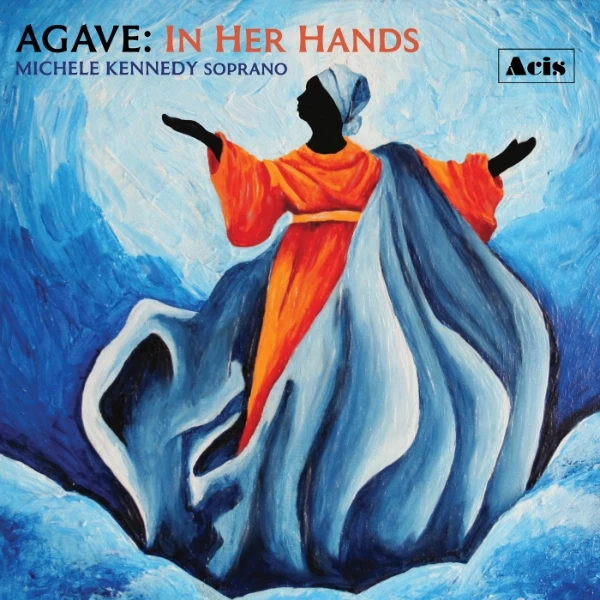
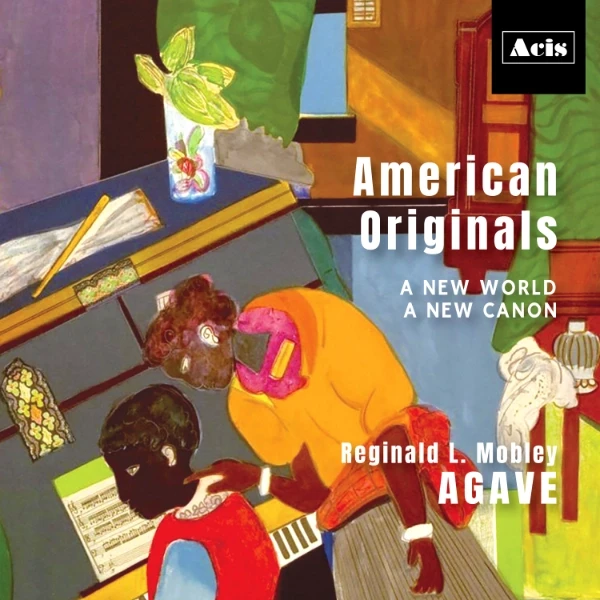
American Originals
A New World, A New Canon | Featuring Reginald Mobley, countertenor
64th GRAMMY® Nominee, Best Classical Compendium
Reviews
"Mobley’s sound, suffused with gentleness, is as comforting as a warm blanket"
"We are, thankfully, at last becoming aware of the rich seam of composers of color who have been sidelined by history. The songs by Price are highlights, with the likes of ‘Tobacco’ wonderfully cheeky."
"…a haunting sound world introduces Mobley’s wonderfully rich voice, with its seamless high end and irresistible sense of narrative flow… Mobley and the six musicians of Agave inhabit Price’s music with skill and intensity…"
"…expertly performed… a stunning playlist of neglected works… The true standouts in the Price songs are the performances by Mobley and Agave, who embody all the emotions and sounds needed to deliver these works to their fullest effect."
"Mobley has one of the sweetest countertenor voices I’ve heard. He sings with an agile style and beautiful tone. The playing of the early music group, Agave, on period instruments is precise and stylish. This most welcome program—’a new canon for a new world’—is beautifully recorded."
"…rich, timeless pieces that explore much culture… Mobley and company offer a very worldly listen, where they celebrate composers from the last few centuries from all over the Americas who are of color, and they do it with much poise in its chamber, classical, orchestral and baroque appeal."
"Mobley draws on seemingly endless reserves of power and beauty. But there’s something even more exciting going on here – a direct, urgent connection with the music. In this he is well matched by Agave’s vivid colours and stylish phrasing."
"Mobley illuminates the material with his rich, resonant voice, and Agave… partners with him splendidly and also elevates the recording with a number of instrumental performances… captivating…"
"Agile, plump in tone, even, and stylistically alert, [Mobley] flows as if in a single breath from the high Baroque joyfulness of Manuel de Zumaya, the most important composer colonial Mexico produced, to the spiritual-tinged lyricism of Price… Agave… provide sensitive and spirited accompaniment, as well as an enlivening touch of eclectic color to their arrangements that never overwhelm the music. The recording… imparts appropriate intimacy and glow for this music."
"the music has an appealing kind of unity, forged partly by Mobley’s creamy countertenor voice. It is also partly due to the work of Agave, which has a certain let-down-your-hair quality here"
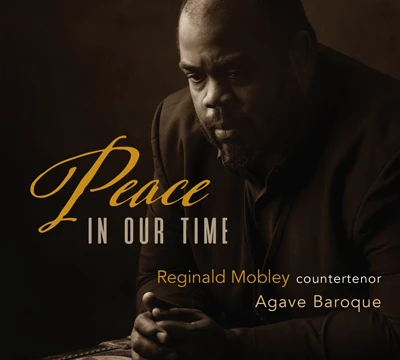
Peace in Our Time
Music of Love and Loss in the Shadow of the Thirty Years’ War
Featuring Reginald Mobley, countertenor
2018
Tracklist
Herr, wenn ich nur dich habe
David Pohle (1624-1695)
Fantasia ex D
Matthias Weckmann (1616-1674), arr. Lebedinsky
Ciacona Mein Freund ist mein
Johann Christoph Bach (1642-1703)
Chorale prelude on Erbarm dich mein, O Herre Gott
Heinrich Bach (1615-1692)
Lamento Ach, daß ich Wassers genug hätte
Johann Christoph Bach (1642-1703)
Paduan à 4
Samuel Scheidt (1587-1654)
Christum ducem, qui per crucem
Johann Rosenmüller (1619-1684)
Sonata 1 à 4
Matthias Weckmann (1616-1674)
Salve Regina
Anonymous
Salve mi Jesu
Franz Tunder (1614-1667)
Es ist nun aus
Johann Christoph Bach
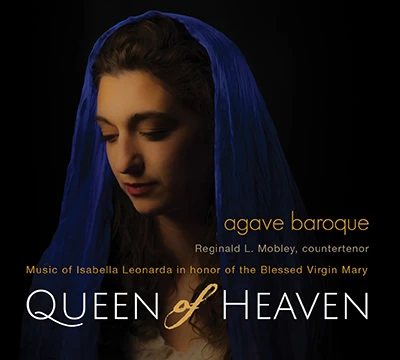
Queen of Heaven
Music of Isabella Leonarda (1620-1704) in honor of the Blessed Virgin Mary
Featuring Reginald Mobley, countertenor
2015
Tracklist
Sonata quarta, Op. 16 no. 4 (1693)
Quam dulcis Es, Op. 13 no. 2 (1687)
Sonata duodecima, Op. 16, no. 12 (1693)
Venite, laetantes, Op. 20 no. 12 (1700)
Sonata prima, Op. 16 no. 1 (1693)
O Maria, quam dulcis, quam cara, Op. 20 no. 8 (1700)
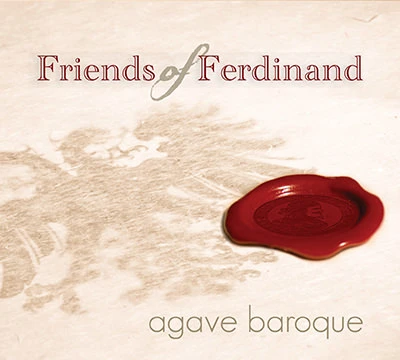
Imagine sitting in church listening to very serious music played on an organ or sung by a choir, when suddenly the sound of a country fiddler or wailing bagpipe wafts into the sacred space. For just a moment, your attention is grabbed by this lively ruckus before returning to the more austere church music. Soon, the two are competing for attention, and perhaps the fiddle band from outside even enters the church and joins in with the church music, or maybe the church organist starts imitating the virtuosic strains wafting in from outside. Eventually, a profound clash of activity or harmony occurs, and they all join up in an epic romp. This fantastical conception, or something like it, was known as stilus fantasticus—or, as Schmelzer called his collection dedicated to the style, Sacro profanus concentus musicus fidium. The unlikely marriage of these disparate sound worlds is a distinctive feature of music by the so-called “Transalpine” composers Antonio Bertali, Johann Heinrich Schmelzer, and many of their contemporaries working in Vienna, Salzburg, and their associated outlying courts. The careers of these two great composer-violinists span nearly five decades of service to the Viennese court, including the reigns of three of the Habsburg Holy Roman Emperors—Ferdinand II, Ferdinand III, and Leopold I, all of whom were themselves music lovers, amateur composers, and collaborators. The music associated with both Kaiser Ferdinands and Leopold—written and performed by a hand-picked array of professional musical personalities—is characterized by a melting pot of disparate styles; some new, some old, and all at once groundbreaking, sublime, unique, and vibrant.
Tracklist
Chiacona
Antonio Bertali (1605 - 1669)
Sonata à due for violin, viola da gamba, and basso
Sonata Op. 1, no. 10
Marco Antonio Ferro (1600 - 1662)
Sonata variatia à due
Johann Henrich Schmelzer (ca.1620 - 1680)
Sonata for violin and continuo in E major, C.108
Heinrich Ignaz Franz Biber (1644 - 1704)
Sonata X from Prothimia Suavissima (part I)
Schmelzer / Bertali
Lamento sopra la morte Ferdinandi III à tre
Schmelzer
Sonata di Chittarra, e Violino, con il suo Basso Continuo
Giovanni Battista Granata (ca.1620 - 1687)
Reviews
"[B]rilliant... profound playing... This recording immediately engages the listener with a sprightly Chiacona by Bertali, establishing Agave Baroque as an energized, free-spirited group from the start. This young group of Californian virtuosi have created a strong future reference for this little known repertoire, and a great follow-up to their widely acclaimed premiere recording Cold Genius..."
"The title refers to Ferdinand I and II, Hapsburg Holy Roman Emperors, and five composers at the courts of Vienna and Salzburg, two of them well-known (Johann Heinrich Schmelzer and Heinrich Ignaz Franz Biber) and three of them now in total eclipse (Antonio Bertali, Marco Antonio Ferro, and Giovanni Battista Granata). The marriage of serious liturgical music and lively profane court music was known as stylus fantasticus--or as Schmelzer called his collection dedicated to the style, Sacro-profanus concentus musicus fidium. Agave Baroque, led by the brilliant violinist Aaron Westman, makes an effulgent case for this early- to mid-17th-century music. This recording immediately engages the listener with a sprightly Chiacona by Bertali, establishing Agave Baroque as an energized, free-spirited group from the start. Schmelzer and Bertali were violin virtuosi, and the repertoire is, to quote the CD notes, "...characterized by a melting pot of disparate styles, some new, some old, and all at once groundbreaking, sublime, unique, and vibrant." Harpsichord (JungHae Kim), viola da gamba (Shirley Hunt), and Baroque guitar (Kevin Cooper) round out the instruments on the disc, with Cooper mostly supporting the profound violin playing of Westman but also shining as a soloist in Granata's Sonata di Chitarra, e Violino con il suo Basso Continuo. This young group of Californian virtuosi have created a strong future reference for this little-known repertoire and a great follow-up to their widely acclaimed premiere recording Cold Genius: The music of Henry Purcell and his contemporaries, released in 2012."